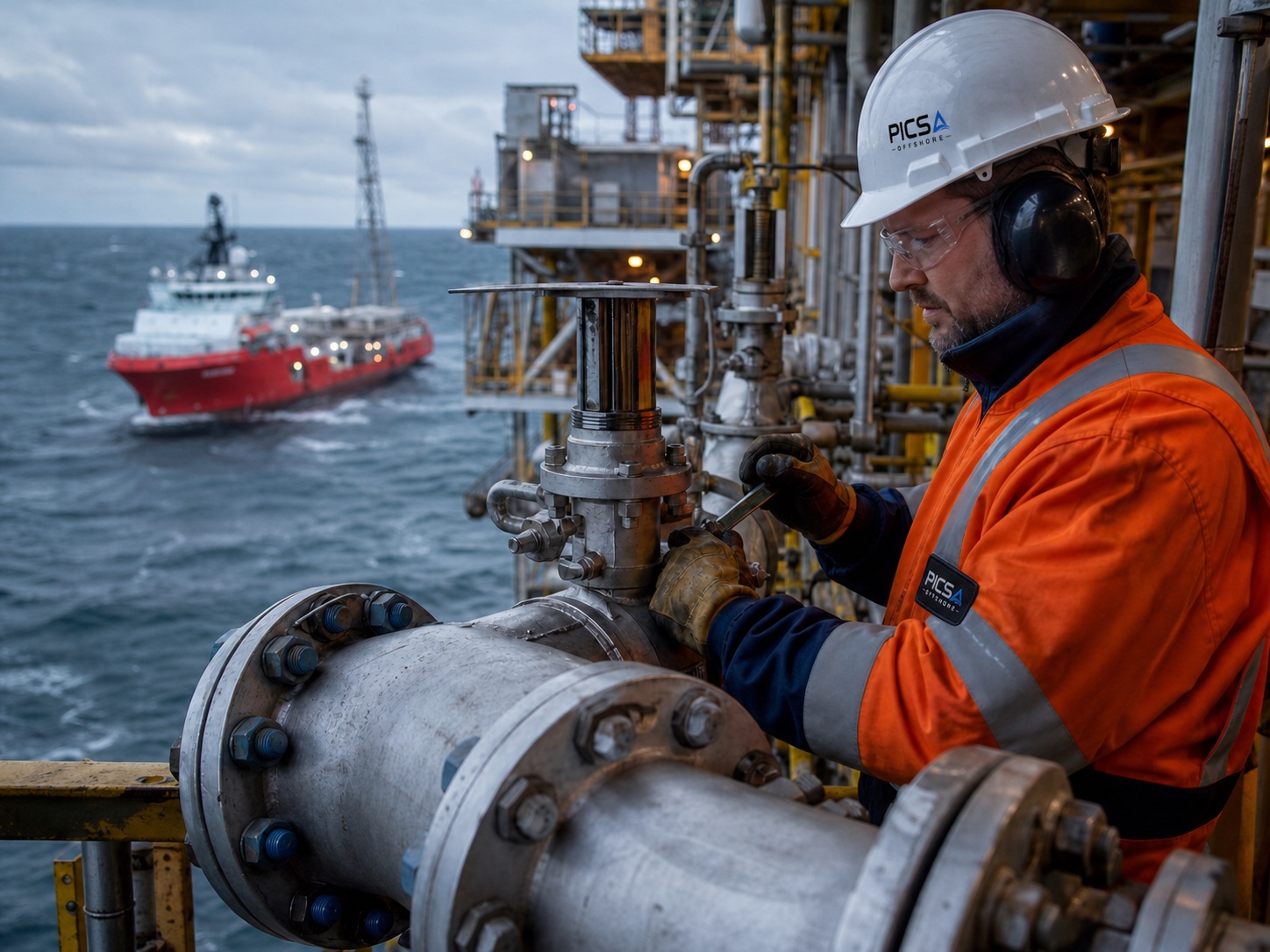
01
Generate
A fibre laser produces controlled light delivered to a scanning process head.
Laser-cleaning technology
A practical explanation of laser ablation, process windows and method selection for offshore work.
Functional principle
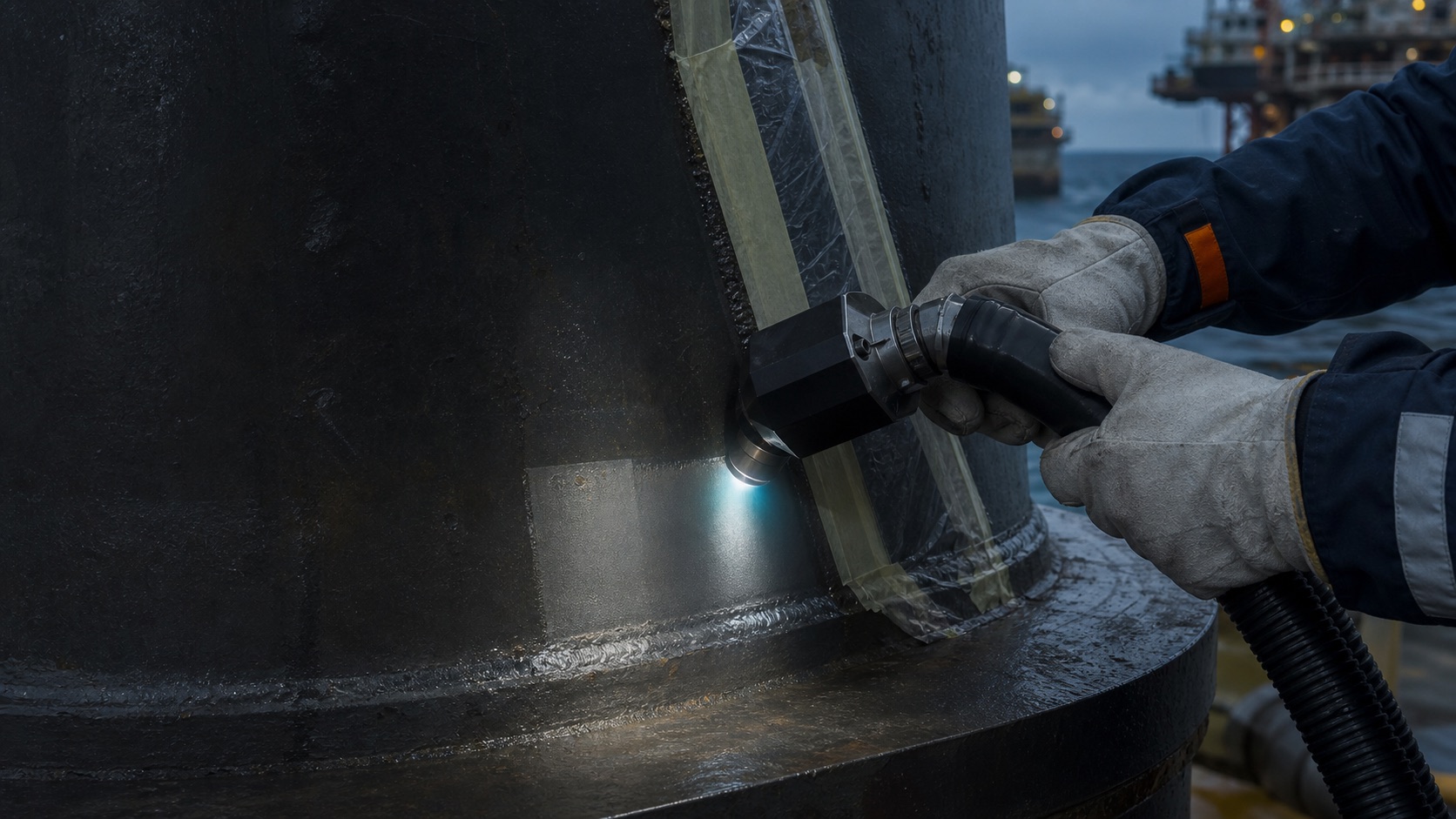
Laser cleaning is a non-contact surface process. Controlled light is scanned over the work area; the unwanted layer responds differently from the underlying substrate and is removed through a combination of rapid heating, pressure and ablation effects.
The useful result comes from a validated process window—not laser power alone. Pulse behaviour, scan pattern, focus, travel speed, overlap and repeated passes are selected around the actual material and required finish.
A fibre laser produces controlled light delivered to a scanning process head.
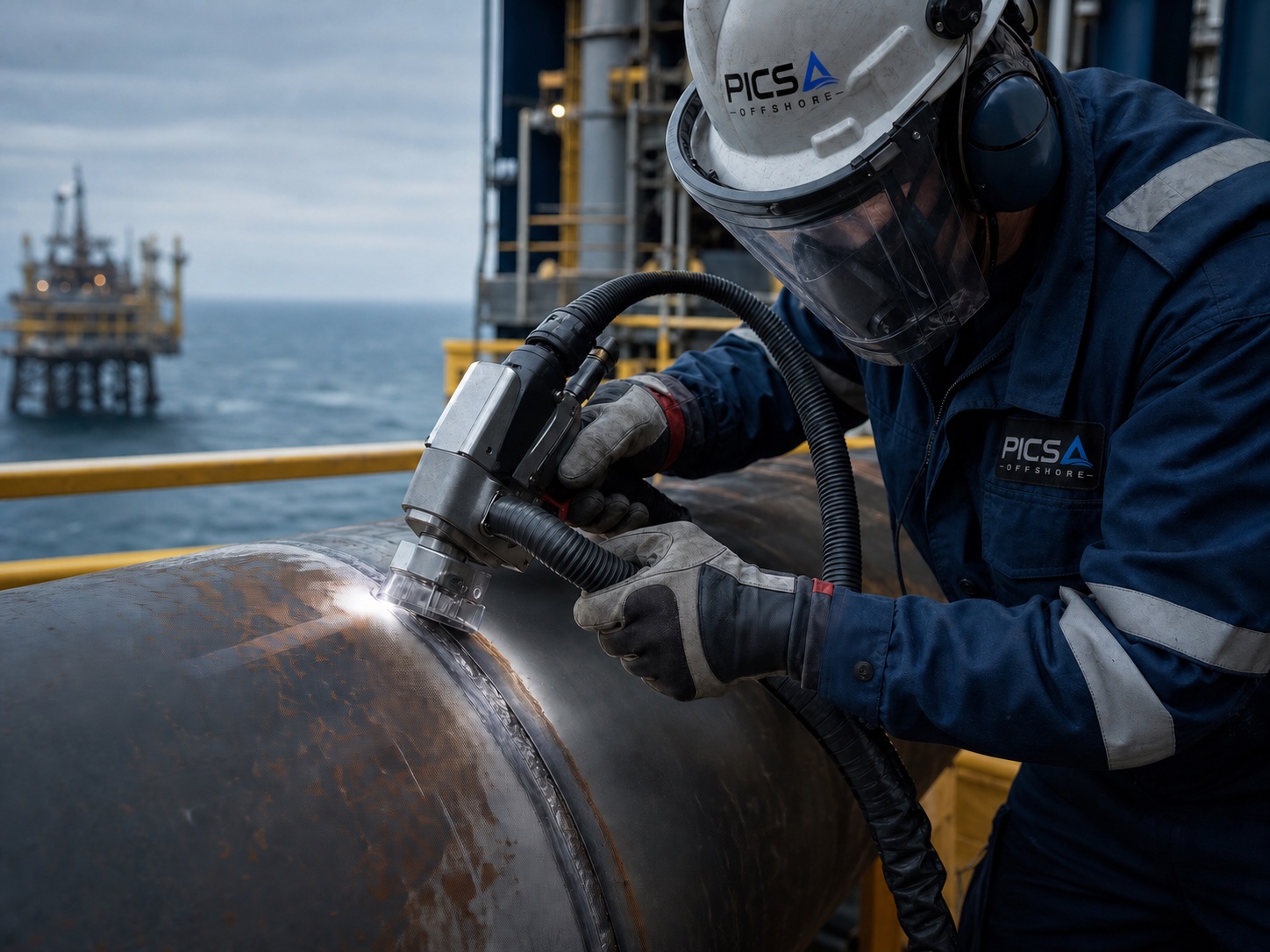
The beam is directed across a defined area using selected power, pulse, scan and focus settings.
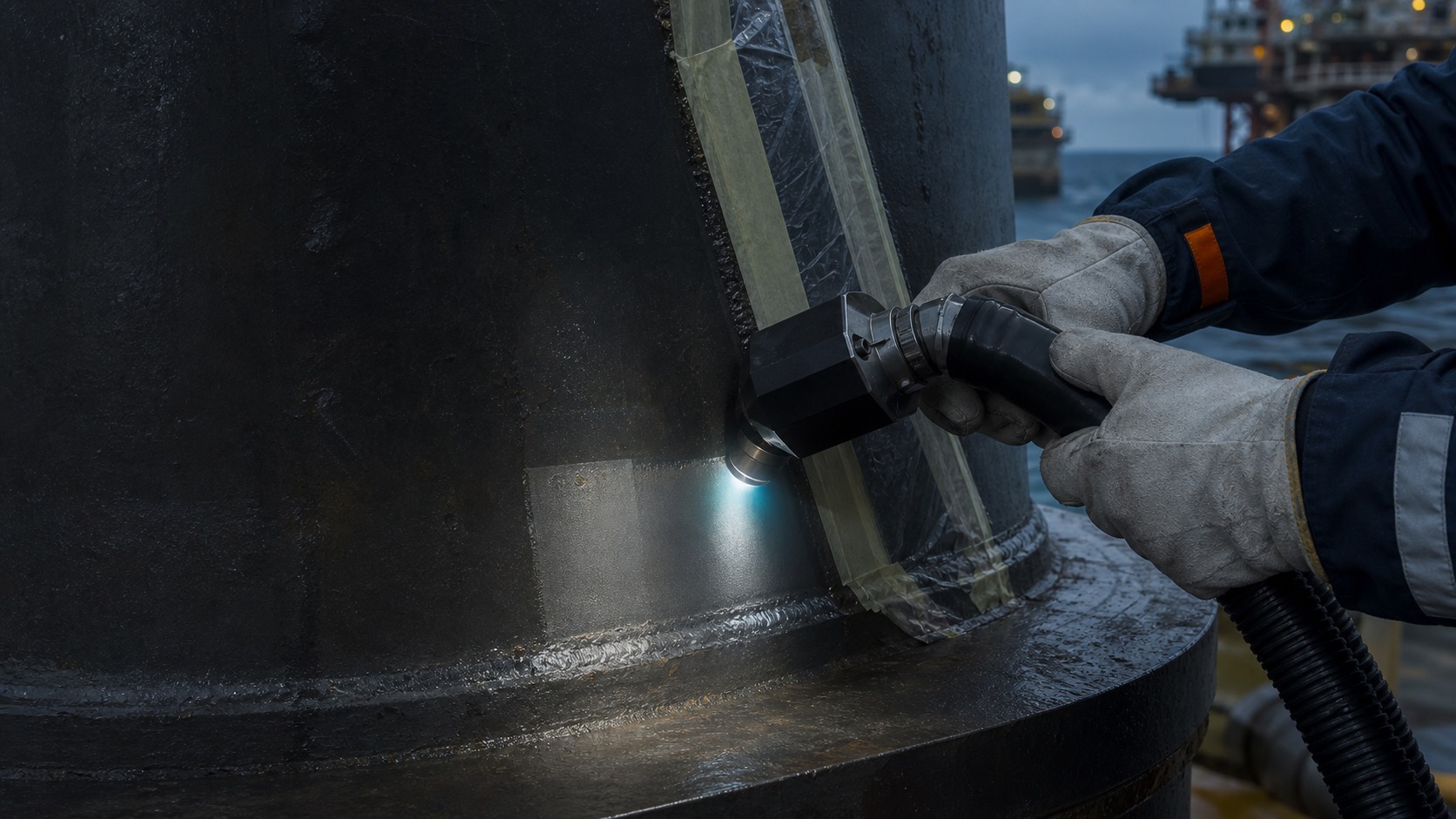
The unwanted layer absorbs sufficient energy to detach, fragment or ablate before the substrate reaches the same response.
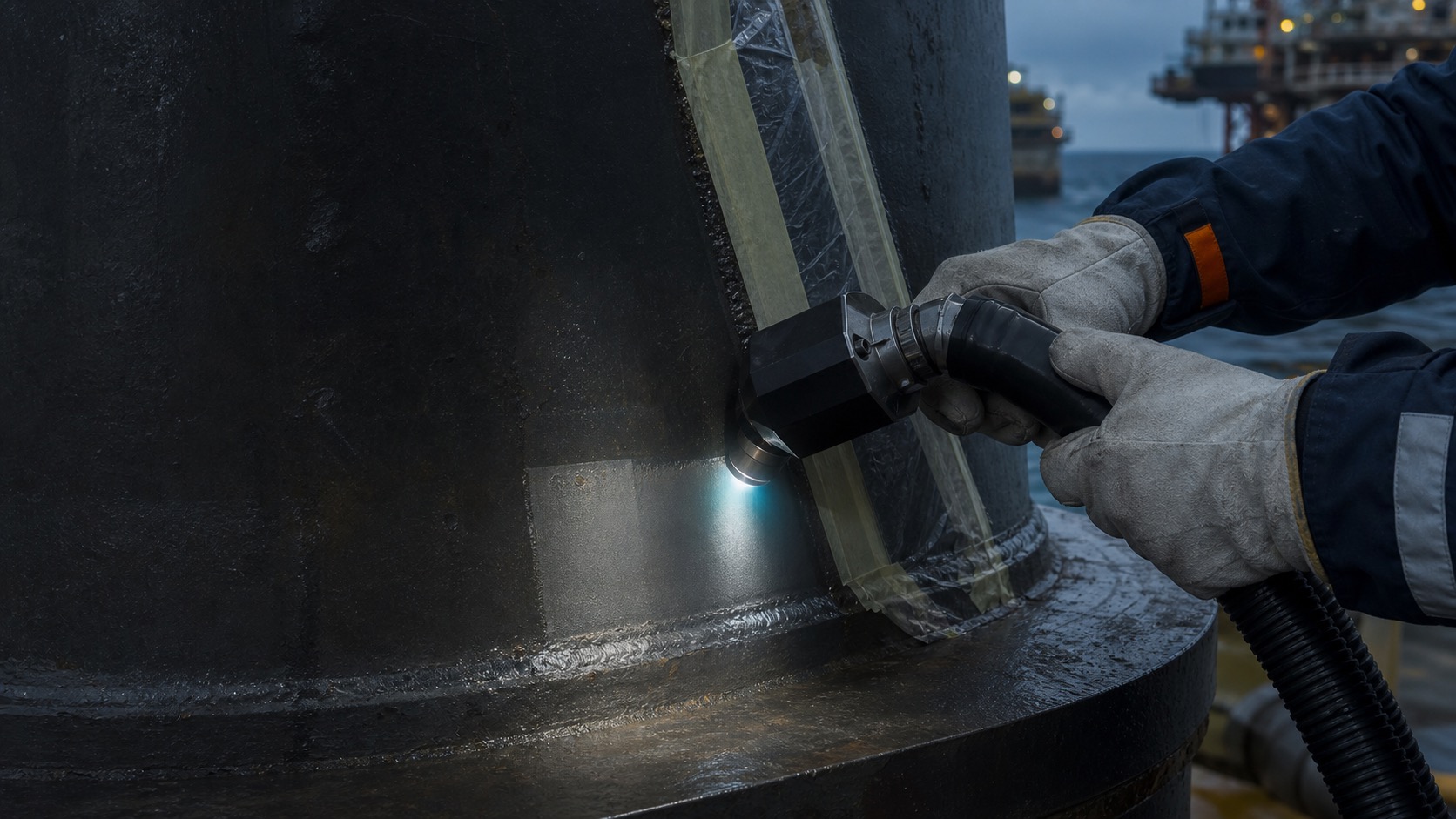
The resulting plume and particulates are collected close to source using material-appropriate extraction and filtration.
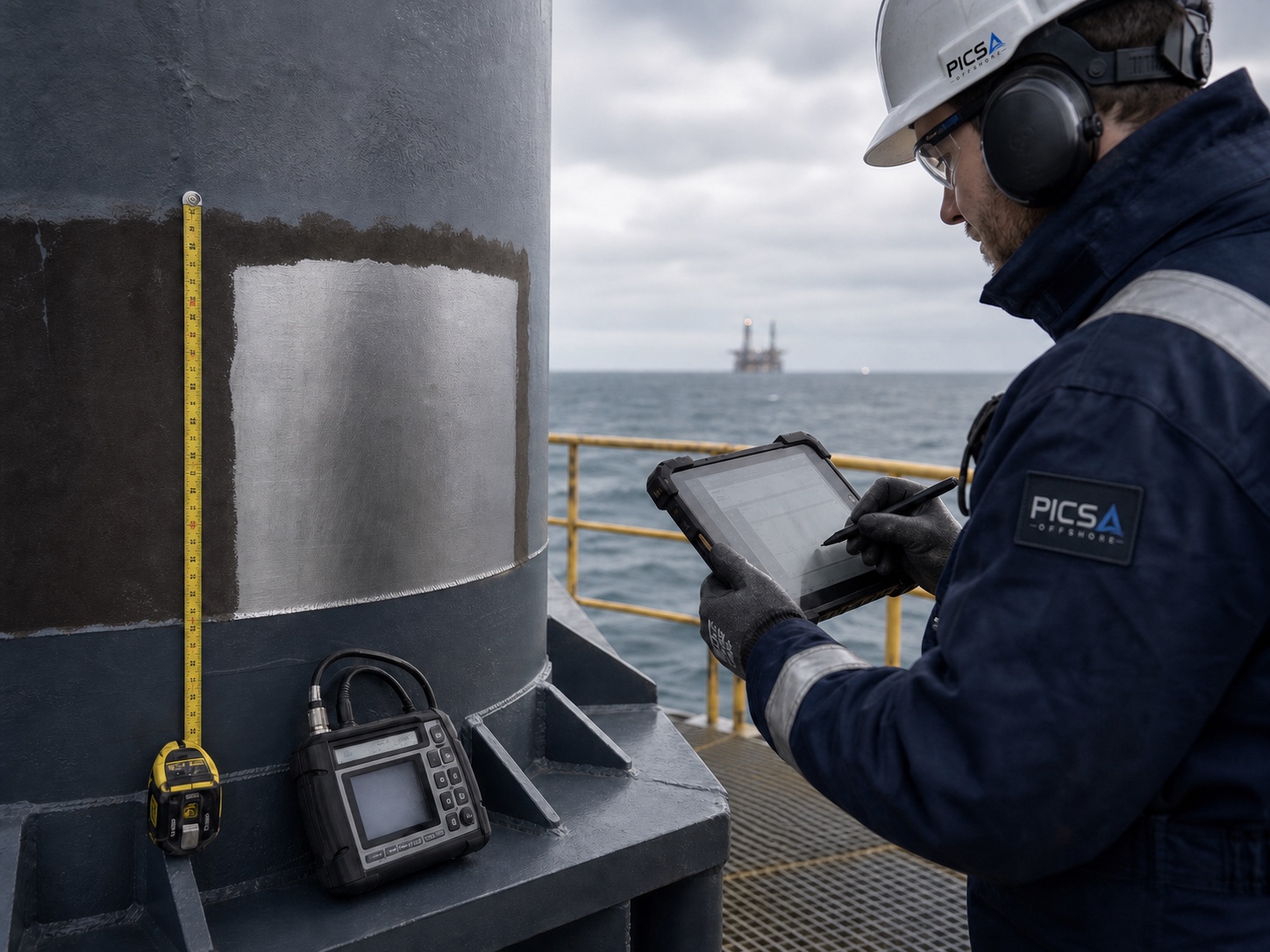
The surface is checked against the agreed reference, inspection method or downstream-process requirement.
Process window
No single setting or equipment label proves suitability. These inputs shape the trial, controls and production plan.
Method selection
Laser, abrasive, chemical, water-based and mechanical processes each have strengths. PICSA compares the complete delivery context.
Start a conversation